Sunday, May 1, 2011


Pruning your Garden
Pruning is one of those things that intimidates new gardeners — even some of us who've been doing it for a long time. True, you can do a lot of damage if you go about it in the wrong way. And if you want to take on complex pruning jobs — such as restoring fruit trees or shaping hedges — it makes sense to get a good book on the subject. I recommendThe Pruning Book by Lee Reich. But, with a few simple guidelines, even a beginner can prune ornamental shrubs successfully. In general, your goal with any ornamental shrub is to:
- Remove dead or damaged wood
- Open up the shrub for better air movement
- Reduce height, if desired
Start in late winter, before the leaves come out. It's much easier to see what you're working with. Plus, you get to be in the garden — at last!
Make sure you have a set of quality tools. For most jobs, you can get by with a set of hand-held pruners and a pruning saw for bigger branches. For big jobs, it's handy to have a loppers to take care of branches that are too thick for the hand pruners. Don't skimp on quality. Good tools are more expensive, but they make the job easier and more efficient.
It's important to identify each shrub before you prune. If you don't know what it is, find a neighbor that can help you, or contact a Master Gardener via your county cooperative extension service.
Why? Some shrubs should not be pruned in spring. In general, spring bloomers, such as magnolias and lilacs, should be pruned after they bloom. There's an old saying about lilacs: prune after they bloom but before the Fourth of July. Any later and you risk cutting off the next season's blooms. For these early-flowering shrubs, just look for dead or damaged wood and remove it.
Once you've identified your shrub as a candidate for late-winter pruning, look for dead or damaged wood. Remove it, using hand pruners or the pruning saw for larger branches.
If you want to keep the shrub compact, consider removing some of the older, thicker branches and leaving the younger ones. With many shrubs, you can remove the entire branch, right to the ground. Another reason to remove some of the old wood: It relieves congestion and opens up the shrub. Better airflow means less chance for diseases, such as powdery mildew.

To renew the viburnum hedge, I used a pruning saw to take out about a third of the older branches — right at ground level. Then, I reduced the height by 1 to 2 feet. The "tough-love" pruning looks a little harsh, but the effort will pay off.
After you've thinned the shrub, stand back and take out branches that don't "fit" the structure of the shrub. This is subjective, so do what you think is right. In some cases, it's just a matter of trimming a gangly branch or two. As you work, keep looking for dead or damaged wood that you might have missed.
If your shrub puts out a lot of suckers — fast-growing branches that appear at the base of the shrub — you might want to remove some of them, especially if the plant is growing vigorously.
That's it. During the year, pay attention to how your pruned shrubs grow and make notes for next year. Again, it's pretty important to identify your shrub before you start making cuts. For instance, hydrangeas benefit from special pruning techniques. The popular blue varieties are best pruned right after blooming. However, white Annabelles and PeeGees can be pruned hard in spring.
Saturday, April 30, 2011
Covering Ground in your Garden
Fill the gaps in your garden with these expert choices for sunny or shady sites.
Ground covers are a gardener's utility plants-we generally don't grow them unless we need them. But maybe we should use ground covers more. These low-growing plants can beautify a spot where nothing seems to fit, and can cover steep slopes to help prevent erosion problems. Plus, they're a top choice if you want to reduce the size of your lawn, or have a shady spot where grass just won't grow.
If you have a patch of ground that needs covering, consider these expert picks:
For sun
There's almost no limit when it comes to ground covers for sunny sites. Mike Heger, owner of Ambergate Gardens (www.ambergategardens.com) in Chaska, Minnesota, says his favorites include cranesbills (Geranium spp). "One attractive species is G. sanguineum, which bears magenta-pink flowers through the summer and brilliant red autumn foliage," Heger says. He also likes bellflowers (Campanula spp), with their charming blue or white, bell-shaped flowers, and low-growing filipendulas (Filipendula vulgaris) with feather-like flowers and attractively cut foliage.
Carla Allen, owner of South Cove Nursery (www.klis.com/scove ) in Yarmouth, Nova Scotia, likes various thymes (Thymus spp.) to cover her ground. "Woolly thyme (T. pseudolanuginosus) is my favorite because of the color and texture-so many other colors play well against its fuzzy gray leaves," she says. In addition to their colors and textures, many thymes offer pleasant fragrances.
Gardeners in the South need plants that will stand up to heat and humidity, such as lilyturf (Liriope spp.), which has grassy foliage and spikes of purple flowers. Carl Schoenfeld, owner of Yucca Do Nursery (www.yuccado.com) in Hempstead, Texas, likes Carex flaccosperma, a native sedge with blue foliage. "It's evergreen and makes a great ground cover in sun or deep shade," he says. Another choice is 6-inch-tall Manfreda variegata. It tolerates full sun or light shade, says Schoenfeld, and "it has fabulous aloelike spotted leaves with undulating edges-very unusual."
Dwarf daylilies (Hemerocallis spp.) are an old standby sometimes overlooked. "They're fantastic ground covers, but a little taller than most" says Allen. Newer cultivars such as ‘Woodside Ruby' can help extend the blooming season into late summer and come in a range of colors from deep red to soft pink.
Another favorite ground cover is silvery-leafed lamb's ears (Stachys byzantina). In the right site, it happily spreads and sets off nearby plants with its soft gray color. For a mossy texture, consider creeping phlox (Phlox subulata). It has blooms in shades of pink, white, and blue in early spring. Another fine choice for pink, white, or blue blooms is ajuga (Ajuga spp.)-especially the variegated forms.
For shadeGround covers seem to receive their greatest calling in shady spots for areas where grass won't grow well. Luckily, there is a host of choices for shade.
Dana Moore, owner of Blue Moon Nursery (www.bluemoonnursery.com ) in Preston, Washington, likes bigfoot geranium (Geranium macrorrhizum). "It makes a nice, wonderfully dense ground cover, even in dry shade," she says. Bigfoot geraniums bear clusters of pink flowers in early summer. They have attractive foliage that turns reddish-orange in autumn.
Heger says, "The best choice for shade, as far as I'm concerned, is our native wild ginger, Asarum canadense." It has fuzzy, heart-shaped leaves and hidden springtime flowers. (A relative, European wild ginger, A. europaeum, stays evergreen in Zones 4 to 8). More of Heger's picks include autumn-flowering white wood aster (Aster divaricatus), and sweet woodruff (Galium oderatum) with its attractive scented foliage and springtime clusters of small white flowers.
While you might not think of them as ground covers, hostas (Hosta spp.) are also an excellent choice for shade. "Very few weeds can make their way through those great big floppy leaves," Allen says. You can use any hosta as a ground cover, from small-statured ‘Ginko Craig' to large ‘Frances Williams', depending on how much room you have. Southern gardeners who can't grow hostas don't need to miss out, however. Schoenfeld suggests growing Drimiopsis maculata, also called South African hosta. "It's a hosta-like plant with purple-spotted, fleshy, dark green, healthy-looking leaves. It grows well in deep shade and is very drought tolerant."
For dense shade, Schoenfeld suggests a Mexican rain lily, Zephryanthes sp. Labuffarosa. It bears dense evergreen grass-like foliage and pink or white flowers in summer ("So thick they look like snow," he says). (Gardeners outside of Zones 7b to 10 can grow this bulb as a houseplant.)
Other shady standbys include sweet-scented lily-of-the-valley (Convallaria majalis), vinca (Vinca minor or V. major), fast-spreading bishop's weed (Aegopodium podagraria ‘Variegata'), and pink- or white-flowering dead nettle (Lamium maculatum). For lots of blooms, don't forget goldenstar, Chrysogonum virginianum. It blooms with daisylike flowers all summer.
Pigsqueak (Bergenia spp.) with springtime pink or white flowers, has evergreen foliage that takes on purple or red tones for added winter interest. (Its name comes from the sound the foliage makes when you rub it briskly.)
ChoosingAs you decide which ground cover to use, consider all of its qualities. For example, if it's a large site, you can plant something that grows taller-even to several feet tall. Smaller sites may require a lower-growing species, however.
While most of us are attracted to flowers, most ground covers only flower for a short time. To compensate, take a good look at the foliage. For instance, you might pick a variegated cultivar of vinca over a green-leafed type to add more color interest, or you might use a fine-textured ground cover such as a perennial geranium or a thyme around shrubs or plants with larger, coarser leaves.
Remember that many ground covers are spreaders. Check with the nursery or your extension service to be sure they don't become rampant in your area.
Planting notes
Clear the area of weeds before you plant ground covers. Weed killers broadly applied to the area after planting will kill both ground covers and weeds.)
Place plants just enough apart to match their mature width, so they'll fill in quickly.
Use a pre-emergence herbicide to prevent weed seeds from sprouting between the plants. (But don't use pre-emergence herbicides if you plant ground covers from seed.)
After planting, spread a 1- to 2-inch-deep layer of mulch between the plants to deter weeds.
For added interest, interplant spring bulbs such as muscari or narcissus with ground covers, which help mask the fading foliage of the bulbs after they bloom.
To cover an area quickly, set plants just enough apart to match their mature width.
Containing plantsIf space is limited, you may want to contain aggressive plants before they spread too far. Try one of the following techniques:
Sink root barriers into the soil (made from wood, metal, or other materials). For most perennials, sink barriers at least a foot deep.
Grow aggressive plants in containers; sink the containers into the ground.
Dig a trench at least 8 inches deep where ground cover growth is to end. Maintain the border by running a hoe through the trench once a week.
If you have a patch of ground that needs covering, consider these expert picks:
For sun
There's almost no limit when it comes to ground covers for sunny sites. Mike Heger, owner of Ambergate Gardens (www.ambergategardens.com) in Chaska, Minnesota, says his favorites include cranesbills (Geranium spp). "One attractive species is G. sanguineum, which bears magenta-pink flowers through the summer and brilliant red autumn foliage," Heger says. He also likes bellflowers (Campanula spp), with their charming blue or white, bell-shaped flowers, and low-growing filipendulas (Filipendula vulgaris) with feather-like flowers and attractively cut foliage.
Carla Allen, owner of South Cove Nursery (www.klis.com/scove ) in Yarmouth, Nova Scotia, likes various thymes (Thymus spp.) to cover her ground. "Woolly thyme (T. pseudolanuginosus) is my favorite because of the color and texture-so many other colors play well against its fuzzy gray leaves," she says. In addition to their colors and textures, many thymes offer pleasant fragrances.
Gardeners in the South need plants that will stand up to heat and humidity, such as lilyturf (Liriope spp.), which has grassy foliage and spikes of purple flowers. Carl Schoenfeld, owner of Yucca Do Nursery (www.yuccado.com) in Hempstead, Texas, likes Carex flaccosperma, a native sedge with blue foliage. "It's evergreen and makes a great ground cover in sun or deep shade," he says. Another choice is 6-inch-tall Manfreda variegata. It tolerates full sun or light shade, says Schoenfeld, and "it has fabulous aloelike spotted leaves with undulating edges-very unusual."
Dwarf daylilies (Hemerocallis spp.) are an old standby sometimes overlooked. "They're fantastic ground covers, but a little taller than most" says Allen. Newer cultivars such as ‘Woodside Ruby' can help extend the blooming season into late summer and come in a range of colors from deep red to soft pink.
Another favorite ground cover is silvery-leafed lamb's ears (Stachys byzantina). In the right site, it happily spreads and sets off nearby plants with its soft gray color. For a mossy texture, consider creeping phlox (Phlox subulata). It has blooms in shades of pink, white, and blue in early spring. Another fine choice for pink, white, or blue blooms is ajuga (Ajuga spp.)-especially the variegated forms.
For shadeGround covers seem to receive their greatest calling in shady spots for areas where grass won't grow well. Luckily, there is a host of choices for shade.
Dana Moore, owner of Blue Moon Nursery (www.bluemoonnursery.com ) in Preston, Washington, likes bigfoot geranium (Geranium macrorrhizum). "It makes a nice, wonderfully dense ground cover, even in dry shade," she says. Bigfoot geraniums bear clusters of pink flowers in early summer. They have attractive foliage that turns reddish-orange in autumn.
Heger says, "The best choice for shade, as far as I'm concerned, is our native wild ginger, Asarum canadense." It has fuzzy, heart-shaped leaves and hidden springtime flowers. (A relative, European wild ginger, A. europaeum, stays evergreen in Zones 4 to 8). More of Heger's picks include autumn-flowering white wood aster (Aster divaricatus), and sweet woodruff (Galium oderatum) with its attractive scented foliage and springtime clusters of small white flowers.
While you might not think of them as ground covers, hostas (Hosta spp.) are also an excellent choice for shade. "Very few weeds can make their way through those great big floppy leaves," Allen says. You can use any hosta as a ground cover, from small-statured ‘Ginko Craig' to large ‘Frances Williams', depending on how much room you have. Southern gardeners who can't grow hostas don't need to miss out, however. Schoenfeld suggests growing Drimiopsis maculata, also called South African hosta. "It's a hosta-like plant with purple-spotted, fleshy, dark green, healthy-looking leaves. It grows well in deep shade and is very drought tolerant."
For dense shade, Schoenfeld suggests a Mexican rain lily, Zephryanthes sp. Labuffarosa. It bears dense evergreen grass-like foliage and pink or white flowers in summer ("So thick they look like snow," he says). (Gardeners outside of Zones 7b to 10 can grow this bulb as a houseplant.)
Other shady standbys include sweet-scented lily-of-the-valley (Convallaria majalis), vinca (Vinca minor or V. major), fast-spreading bishop's weed (Aegopodium podagraria ‘Variegata'), and pink- or white-flowering dead nettle (Lamium maculatum). For lots of blooms, don't forget goldenstar, Chrysogonum virginianum. It blooms with daisylike flowers all summer.
Pigsqueak (Bergenia spp.) with springtime pink or white flowers, has evergreen foliage that takes on purple or red tones for added winter interest. (Its name comes from the sound the foliage makes when you rub it briskly.)
ChoosingAs you decide which ground cover to use, consider all of its qualities. For example, if it's a large site, you can plant something that grows taller-even to several feet tall. Smaller sites may require a lower-growing species, however.
While most of us are attracted to flowers, most ground covers only flower for a short time. To compensate, take a good look at the foliage. For instance, you might pick a variegated cultivar of vinca over a green-leafed type to add more color interest, or you might use a fine-textured ground cover such as a perennial geranium or a thyme around shrubs or plants with larger, coarser leaves.
Remember that many ground covers are spreaders. Check with the nursery or your extension service to be sure they don't become rampant in your area.
Planting notes
Clear the area of weeds before you plant ground covers. Weed killers broadly applied to the area after planting will kill both ground covers and weeds.)
Place plants just enough apart to match their mature width, so they'll fill in quickly.
Use a pre-emergence herbicide to prevent weed seeds from sprouting between the plants. (But don't use pre-emergence herbicides if you plant ground covers from seed.)
After planting, spread a 1- to 2-inch-deep layer of mulch between the plants to deter weeds.
For added interest, interplant spring bulbs such as muscari or narcissus with ground covers, which help mask the fading foliage of the bulbs after they bloom.
To cover an area quickly, set plants just enough apart to match their mature width.
Containing plantsIf space is limited, you may want to contain aggressive plants before they spread too far. Try one of the following techniques:
Sink root barriers into the soil (made from wood, metal, or other materials). For most perennials, sink barriers at least a foot deep.
Grow aggressive plants in containers; sink the containers into the ground.
Dig a trench at least 8 inches deep where ground cover growth is to end. Maintain the border by running a hoe through the trench once a week.
Growing Organically
What is growing organically? It depends upon who you talk to. Some think it's synonymous with "hippy" while others believe it's a baby boomer fad (see Gardening as an Anarchist Plot). The simple answer is, that organic gardeners only use animal or vegetable fertilizers rather than synthetics. It also means natural pest control devoid of industrial insecticides. In other words, using natural substances and beneficial insects to ward off pests instead of spraying with the backyard equivalent of Agent Orange.
However, organic growing is much more than what we use and don't use (see Garden Organically). It is a philosophy that stresses increasing the natural health of the soil, choosing appropriate plants that are suited to your area, and working with nature to produce a healthy and productive garden.
While growing without chemicals is trendy now, it's been around since ancient times. It was the only way to farm. Chemical fertilizers weren't even a possibility until the 1840's when some scientist in a lab coat discovered that he could mix a couple of test tubes together and make a plant grow. Since then farming has become increasingly chemically based. However, as many as 60 years ago, J. I. Rodale, in articles and in the magazines he founded, began promoting the use of organic fertilizers and pesticides instead of chemicals to avoid harming the environment. To this day, theRodale Institute, which he founded, operates a 333-acre experimental farm and publishes books on gardening as well as Organic Gardeningmagazine.
For me, deciding to go organic was a no-brainer. Most of the conventional ways of managing a garden revolve around killing everything, knocking Mother Nature off-balance and then adding a bunch of chemicals to get her groove back. Not a sustainable system by any means. Learn about alternatives to pesticides here.
However, organic growing is much more than what we use and don't use (see Garden Organically). It is a philosophy that stresses increasing the natural health of the soil, choosing appropriate plants that are suited to your area, and working with nature to produce a healthy and productive garden.
While growing without chemicals is trendy now, it's been around since ancient times. It was the only way to farm. Chemical fertilizers weren't even a possibility until the 1840's when some scientist in a lab coat discovered that he could mix a couple of test tubes together and make a plant grow. Since then farming has become increasingly chemically based. However, as many as 60 years ago, J. I. Rodale, in articles and in the magazines he founded, began promoting the use of organic fertilizers and pesticides instead of chemicals to avoid harming the environment. To this day, theRodale Institute, which he founded, operates a 333-acre experimental farm and publishes books on gardening as well as Organic Gardeningmagazine.
For me, deciding to go organic was a no-brainer. Most of the conventional ways of managing a garden revolve around killing everything, knocking Mother Nature off-balance and then adding a bunch of chemicals to get her groove back. Not a sustainable system by any means. Learn about alternatives to pesticides here.
Tuesday, April 19, 2011
Gardening in Mud Season
How can I get the vegetable garden ready for planting when it won’t stop raining? This is a yearly dilemma for gardeners who live in climates where spring brings drenching rains. It’s best to stay out of the garden entirely when the soil is sodden; every footstep compresses the wet soil, squeezing shut the essential pore spaces. Digging in wet soil is worse yet—a guaranteed way to damage soil structure. I limit my early-spring planting to the raised beds, which I can reach while standing in the wood-chipped path.
Because my garden spot has been devoted to vegetables for more than a decade, the soil is rich and porous; no deep tilling is necessary. But this weekend, as I prepared to seed rows of leaf lettuce and spinach and plug in onions and broccoli transplants, I faced raised beds that were carpeted with a bright green ryegrass cover crop, planted last fall. Cover crops are usually turned under and left to decompose in place, but in this case I skimmed off strips of the ryegrass to make room for the transplants and seeds. I shook the loose soil off the roots and put the tops in the compost pile.
I did nothing more to the soil in the raised beds except to scratch shallow drills for my seeds into the surface. When soil is soggy, the less you work with it the better.
Mud season will pass. By the time I plant tomatoes and peppers in May, the soil will likely have dried enough for me to till under what remains of the cover crop. And I’ll bring out the hose to water in my transplants—something I definitely didn’t need to do on this rainy weekend.
Vertical Gardening
When you grow your vining vegetablesupward, you use less ground space. This increases your yield per square foot because you can fit more plants into the garden. But saving space is just one reason to grow your plants on trellises. Here are some other advantages to growing up:
- Monitoring and controlling pests is easier because they're right in front of your face.
- Harvesting is also easier, as there's no stooping or hunching over.
- No more waste due to overripe fruits that are hidden under lush growth.
- Vertical gardens increase accessibility for gardeners with disabilities because they can tend and pick from a chair or garden seat.
So the benefits of trellising are clear. Before you set up a trellis, though, keep in mind these two important points:
- Situate trellises along the north side of your garden to prevent shading other plants.
- Anchor your trellises to protect them from the wind and to handle the weight of the plants by sinking trellis posts 24 inches deep.
What can you grow vertically?
Tomatoes.
Trellis nonbush or indeterminate types, which keep growing and producing fruits until frost. (Determinate varieties are often bushy.) Check out this plan for a sturdy tomato tower.
Tomatoes.
Trellis nonbush or indeterminate types, which keep growing and producing fruits until frost. (Determinate varieties are often bushy.) Check out this plan for a sturdy tomato tower.
Peas, Cucumbers.
Grow nonbush varieties on trellises. Bush types don't need trellising; their vines reach only 4 to 6 feet long.
Grow nonbush varieties on trellises. Bush types don't need trellising; their vines reach only 4 to 6 feet long.
Pole beans, Gourds, Melons.
As a general rule, any variety with fruits smaller than a volleyball can be trellised. Vines will grow strong enough to hold the weight of the fruit, so there's no need to support fruits with individual hammocks.
As a general rule, any variety with fruits smaller than a volleyball can be trellised. Vines will grow strong enough to hold the weight of the fruit, so there's no need to support fruits with individual hammocks.
Squash and pumpkins.
Small-fruited and nonbush types, such as miniature pumpkins, and acorn and buttercup squash, are suitable for trellising. Here are plans for a simple squash trellis.
Small-fruited and nonbush types, such as miniature pumpkins, and acorn and buttercup squash, are suitable for trellising. Here are plans for a simple squash trellis.
Making a Vegetable Garden
You're aware of the health benefits of eating fresh vegetables, you have the space for a small garden, but just don't know where to start? Look no further. Here's all you need to know to put fresh, crisp vegetables on your dinner table.
First, think small. Don't bite off more than you can chew, or hoe. It's like starting out an exercise program by running five miles the first day. You get tired, sore and you quit. Likewise, if you plant a huge garden the first year, you'll curse, cuss and turn your sore back on gardening for good. So, if you're new to gardening, start off with a garden no larger than 8' X 10.' You can always expand later if you can't get enough of those fresh, crispy vegetables.
Choose a location that receives as much sun as possible throughout the day. Northern gardeners should insist on full sun. Now you're ready to work up the soil. You can rent a rear tine tiller or borrow one from a friend or neighbor for this task. Work the soil up sod and all--in other words don't remove the sod. Removing the sod creates a recess in the soil, resulting in poor drainage.
Next, examine the soil. Is it predominantly clay, sand or a sandy loam? The latter is the best. You can distinguish a sandy loam from the other two by giving it the squeeze test. If you can take a handful of dirt and squeeze it in a ball then watch it crumble when you let go, you've got a sandy loam soil type. If you're not sure, take a sample down to your local extension office. While you're there ask them about having your soil tested for proper pH levels and major nutrients like nitrogen, potassium and potash.
If you're stuck with a predominantly sandy or clay soil it will be worth bringing in some topsoil to get you off on the right foot. If you can't afford topsoil, you can amend the soil with compost. Compost includes any biodegradable material which can be broken down into a fine, dark humus. Well rotted livestock manure is the best choice for getting a clay or sandy soil into shape. Whatever you use for compost apply it often, like once in the spring and once in the fall. It will take a few seasons to improve a poor soil type.
Another thing you can do is use topsoil to make a raised bed. Landscape timbers or treated 2 X 12's work best for this. You can stack these about five high. Besides enclosing your garden and making a good growing medium, the raised bed will make it easy to plant and weed your garden, particularly if you've got back trouble or have difficulty bending over.
Hey, I think we're ready to plant! Here's the fun part. You can purchase seeds from the store or order them through the many catalogs on the market (see below). Whatever you do, buy quality seeds. I hate to see people spend hours preparing a garden and then go out and purchase 10/$1.00 seeds. It would be like buying a new car and replacing the engine oil with a cheap brand of oil. Look for brand name seeds just like you would anything else. What we're trying to do is maximize our chances of success at this endeavor, not pinch pennies.
In a small garden you may want to avoid some of the space hogs, like corn, squash and pumpkin. However, there are bush type varieties of pumpkin, such as Hybrid Spirit Bush and Autumn Gold that don't take up much room. Also, summer squashes take up less room then do the winter squash. If you do plant corn, remember to grow this one along the north side of your garden so it doesn't shade the rest of your crops.
Easy to grow crops include onions, peas, beets, rutabaga and zucchini squash. These can also be planted early.Tomatoes and peppers need to be started from seed indoors about 8 weeks prior to planting time or purchased as transplants. Be sure to space things in your small garden according to the instructions on the packets. And make sure you plant your tender crops (tomatoes, squash, beans and watermelon) after all danger of frost has passed. Ask the old timers in the area when this date is. One common mistake people make, especially in the northern climates, is to plant everything when the weather turns nice only to succumb to a frost a week or two later, thus wiping out all their hard work. Plant by the expected last frost dates, not the weather.
Unfortunately, critters (and children) may take a shine to your new garden. Rabbits, geese and deer can be a problem. For the small garden, a wire mesh surround works well. This will discourage most critters and some people. I've seen people take chicken wire and staple it to the top of their landscaping timbers on a raised bed to keep out geese and the like.
Vandals can also attack gardens, especially in conspicuous areas of a city, such as in a community garden. Since things like watermelon and squash are the vandal's favorite, some folks plant heirlooms that don't look like common vegetables. You can also cover ready to ripen fruit with straw to conceal the vegetable. Another method in a community garden is to display your name boldly near your garden plot. A conscientious person may think twice before robbing your garden!
Watch for insect infestation. If things are properly spaced in your small garden, insects shouldn't be a big problem. If you do see evidence of chewing on plants, especially things like cabbage, don't wait to fight back. Identify the insect causing the damage and choose an insecticide that will control that specific insect or Soap-Shield. Proper spacing, weeding and fertilizing is a good way to prevent disease and insect infestation without having to resort to harmful insecticides.
Speaking of fertilizer, you can use a granular or water soluble fertilizer to feed your hungry plants. A 15-15-15 or 20-20-20 fertilizer is a good all purpose fertilizer which will provide equal parts nitrogen, phosphorous and potassium and some of the minor nutrients that plants need. Apply granular fertilizers a few days before you plant, working it into the top six inches of topsoil. You can side dress after the plants come up and at two or three week intervals by using a water soluble fertilizer such as that sold by the Miracle Grow or Shultz companies.
Soon, it will be time to harvest your garden fare. To get the full health benefits of your vegies, harvest when ripe and don't over cook your vegetables. More importantly, enjoy the experience of eating fresh, crisp vegetables you grew yourself!
First, think small. Don't bite off more than you can chew, or hoe. It's like starting out an exercise program by running five miles the first day. You get tired, sore and you quit. Likewise, if you plant a huge garden the first year, you'll curse, cuss and turn your sore back on gardening for good. So, if you're new to gardening, start off with a garden no larger than 8' X 10.' You can always expand later if you can't get enough of those fresh, crispy vegetables.
Choose a location that receives as much sun as possible throughout the day. Northern gardeners should insist on full sun. Now you're ready to work up the soil. You can rent a rear tine tiller or borrow one from a friend or neighbor for this task. Work the soil up sod and all--in other words don't remove the sod. Removing the sod creates a recess in the soil, resulting in poor drainage.
Next, examine the soil. Is it predominantly clay, sand or a sandy loam? The latter is the best. You can distinguish a sandy loam from the other two by giving it the squeeze test. If you can take a handful of dirt and squeeze it in a ball then watch it crumble when you let go, you've got a sandy loam soil type. If you're not sure, take a sample down to your local extension office. While you're there ask them about having your soil tested for proper pH levels and major nutrients like nitrogen, potassium and potash.
If you're stuck with a predominantly sandy or clay soil it will be worth bringing in some topsoil to get you off on the right foot. If you can't afford topsoil, you can amend the soil with compost. Compost includes any biodegradable material which can be broken down into a fine, dark humus. Well rotted livestock manure is the best choice for getting a clay or sandy soil into shape. Whatever you use for compost apply it often, like once in the spring and once in the fall. It will take a few seasons to improve a poor soil type.
Another thing you can do is use topsoil to make a raised bed. Landscape timbers or treated 2 X 12's work best for this. You can stack these about five high. Besides enclosing your garden and making a good growing medium, the raised bed will make it easy to plant and weed your garden, particularly if you've got back trouble or have difficulty bending over.
Hey, I think we're ready to plant! Here's the fun part. You can purchase seeds from the store or order them through the many catalogs on the market (see below). Whatever you do, buy quality seeds. I hate to see people spend hours preparing a garden and then go out and purchase 10/$1.00 seeds. It would be like buying a new car and replacing the engine oil with a cheap brand of oil. Look for brand name seeds just like you would anything else. What we're trying to do is maximize our chances of success at this endeavor, not pinch pennies.
In a small garden you may want to avoid some of the space hogs, like corn, squash and pumpkin. However, there are bush type varieties of pumpkin, such as Hybrid Spirit Bush and Autumn Gold that don't take up much room. Also, summer squashes take up less room then do the winter squash. If you do plant corn, remember to grow this one along the north side of your garden so it doesn't shade the rest of your crops.
Easy to grow crops include onions, peas, beets, rutabaga and zucchini squash. These can also be planted early.Tomatoes and peppers need to be started from seed indoors about 8 weeks prior to planting time or purchased as transplants. Be sure to space things in your small garden according to the instructions on the packets. And make sure you plant your tender crops (tomatoes, squash, beans and watermelon) after all danger of frost has passed. Ask the old timers in the area when this date is. One common mistake people make, especially in the northern climates, is to plant everything when the weather turns nice only to succumb to a frost a week or two later, thus wiping out all their hard work. Plant by the expected last frost dates, not the weather.
Unfortunately, critters (and children) may take a shine to your new garden. Rabbits, geese and deer can be a problem. For the small garden, a wire mesh surround works well. This will discourage most critters and some people. I've seen people take chicken wire and staple it to the top of their landscaping timbers on a raised bed to keep out geese and the like.
Vandals can also attack gardens, especially in conspicuous areas of a city, such as in a community garden. Since things like watermelon and squash are the vandal's favorite, some folks plant heirlooms that don't look like common vegetables. You can also cover ready to ripen fruit with straw to conceal the vegetable. Another method in a community garden is to display your name boldly near your garden plot. A conscientious person may think twice before robbing your garden!
Watch for insect infestation. If things are properly spaced in your small garden, insects shouldn't be a big problem. If you do see evidence of chewing on plants, especially things like cabbage, don't wait to fight back. Identify the insect causing the damage and choose an insecticide that will control that specific insect or Soap-Shield. Proper spacing, weeding and fertilizing is a good way to prevent disease and insect infestation without having to resort to harmful insecticides.
Speaking of fertilizer, you can use a granular or water soluble fertilizer to feed your hungry plants. A 15-15-15 or 20-20-20 fertilizer is a good all purpose fertilizer which will provide equal parts nitrogen, phosphorous and potassium and some of the minor nutrients that plants need. Apply granular fertilizers a few days before you plant, working it into the top six inches of topsoil. You can side dress after the plants come up and at two or three week intervals by using a water soluble fertilizer such as that sold by the Miracle Grow or Shultz companies.
Soon, it will be time to harvest your garden fare. To get the full health benefits of your vegies, harvest when ripe and don't over cook your vegetables. More importantly, enjoy the experience of eating fresh, crisp vegetables you grew yourself!
Monday, April 18, 2011
Organic Gardening
With the thousands of diseases and health problems in the world today and the rising awareness among the population, the general public is nowadays seen turning towards the more natural sources of food and other products. This growing sensibility brings about the newest trend of people planting their own vegetables and fruits, and choosing organic gardening as a healthier and more environmentally friendly gardening alternative.
Organic Gardening basically is the cultivation of plants using resources coming from living organisms, ruling out any kind of synthetic fertilizers as well as pesticides or insecticides. The fertilizers used are confined to the natural kind including manure or humus. Creating an organic garden of your own not only gives the confidence of having the products chemical free, but evidences suggest that organically grown food contain a substantially increased amount of vitamins and minerals and tastes better too!
Organic gardening is not limited merely to fruits and vegetables; it provides an array of options for us to choose from; from fragrant fresh flowers, to tasty restorative herbs and honey, plus juicy fresh fruit and delicious vegetables. Here are a few tips on getting your organic garden started.
When it comes to starting a whole new garden, while it is tempting to rush out and start digging, it is beneficial to sit down and devise your plan. Think about planting for your needs, taking into consideration the area available for your use and the type of soil you have. The best type of garden soil for organic gardening is loam. Good soil preparation is vital. Dig in some compost to help this process. Ensure you have a space that will get adequate sunlight.
Next comes choosing the plants for your garden and it is always easier to work with plants that like the climate and the soil that you've got as well as the plants that you are most likely to use in cooking and food preparation. Choose some pest repellent companion plants also.
If purchasing more mature plants from a nursery be warned that they may have been grown using chemical fertilizers and sprayed with pesticides. You may want to source businesses that stock organically grown plants or plant your own organic seeds. Your nursery will be able to assist you here.
Once you have planted your plants be sure to add organic mulch such as lawn clippings or mulched leaves or bark. With the numerous benefits associated with producing your own organic food, organic gardening is rapidly becoming the way of the future; a lifestyle that rewards not only with a beautiful garden, but also with health and happiness!
How to Grow Tomatoes
How to Grow Tomatoes
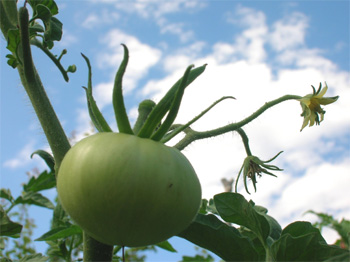
Tomatoes can be grown in raised beds or containers too if space is limited. There are even containers that allow you to grow tomatoes hanging upside down. Use a large container, at least ten inches, preferably more and you can build a trellis for the tomato plant to vine up if you wish. There are commercial tomato cages that can be used as well.
Seed Starting
Everything starts with the seed. In some places, you can grow tomatoes by direct sowing, or sowing directly into the place the tomato plant will be grown. In warmer climates, this can be done with relatively no intervention or protection. After the tomatoes have grown to about six inches, you can mulch them to help retain moisture. Make sure the tomatoes don’t get too soggy but they don’t like dry soil either. Tomatoes are warm loving so if you plan to direct sow, they need to be sown once there is no danger of frost. Tomatoes like full sun and need at least six to eight hours to get the maximum production.
The last frost date is determined by the hardiness zone of your area. This can be found using a chart drawn up by the United States Department of Agriculture (USDA) or call a local agriculture department to find what hardiness zone you are in.
If you want to start tomatoes early, you can choose to start them indoors. Get some smaller containers at least three inches in diameter. Use a soilless germinating mixture for the best results and germination. Place a few seeds in the container and place the container by a sunny window. If you do not have a window where the tomatoes can get at least six hours of sun, you will need to supplement the plant with artififical lighting. Regular lights won’t give the correct type of light needed and may not work to help supplement the tomato plant. You will need to get grow lights (aquarium lights) or shop light fixtures that have flourescent lighting. If you plan to supplement the tomato plants, keep the lights at least three to five inches from the tomato plant’s leaves. Once the plants have reached a height of at least six inches or your frost time is past, then you can safely transplant into the final garden spot.
Plants
Care and Maintanence
Soon your tomatoes will be growing little yellow flowers. This is the spot where the tomato fruit will set. These flowers will need to pollinated in order for this to happen. Most times, this will be done by wind or insects such as bees. But if tomatoes are grown in greenhouses or inside where wind and insects aren’t a possibility, it can be done by hand. A small fan blown everyday on the tomatoes for a little bit of time can help. You can also take a small paint brush and brush each flower moving from flower to flower of the other tomato plants.
Be sure to keep the soil moist but not too soggy. They need warm weather. Sometimes, cooler weather can come in and protection might be needed. If the plants are small enough, they can be protected by two liter bottles. Take green two liter bottles and cut out the bottoms and place them on the tomato plants at night when the temperatures are colder. Make sure to take off the tomato bottles in the morning before the sun has a chance to bake the tomato plants.
Harvest Time
Tradtionally, tomatoes turn bright red when they are ripe. They are also firm with just a slight bit of juiciness when they are ready to be harvested. But since there are many different types of tomatoes, this can vary widely. Some tomatoes may be picked as green tomatoes and fried up to be eaten while others should be picked when they readily come off the stem.
Most tomatoes take two to three months to mature. Cherry tomatoes are generally the first to ripen but there are main season tomatoes that are bred for northern climates and are ready for harvest within two months. Be sure to harvest all fruit before frost sets in as the plant will soon die after these first frosts.
Tomatoes have been around for perhaps thousands of years. They are ever popular in home gardens. Why not have a few in your own home garden?
Subscribe to:
Posts (Atom)